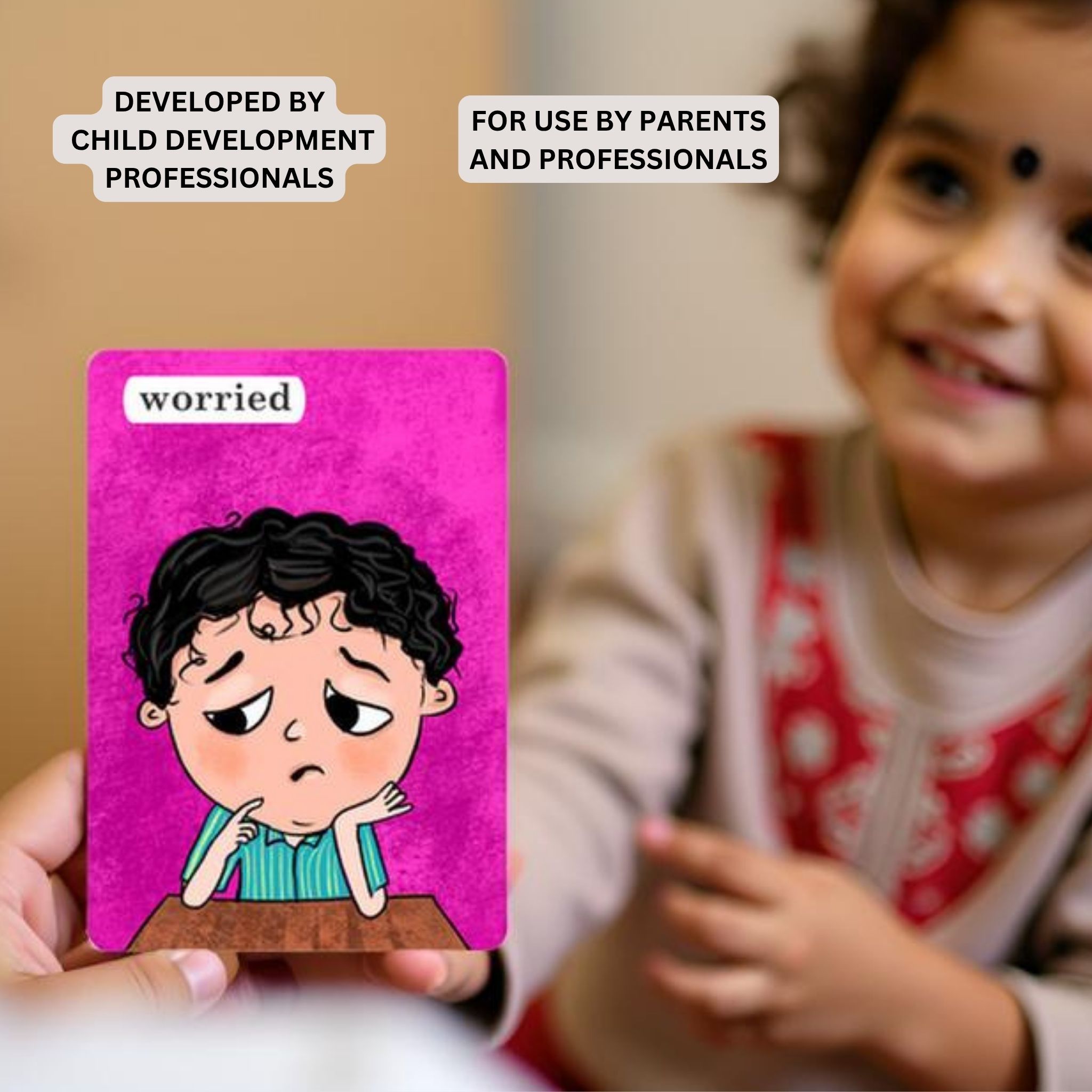
30 Audio-Enabled Emotion Cards with Guided Questions for Recognising Feelings and Understanding Emotions Understanding emotions is an important part of language and social communication.
Children need to learn not only the names of emotions, but also how to recognise emotional clues, understand how someone might be feeling, talk about feelings and begin to understand why people feel the way they do.
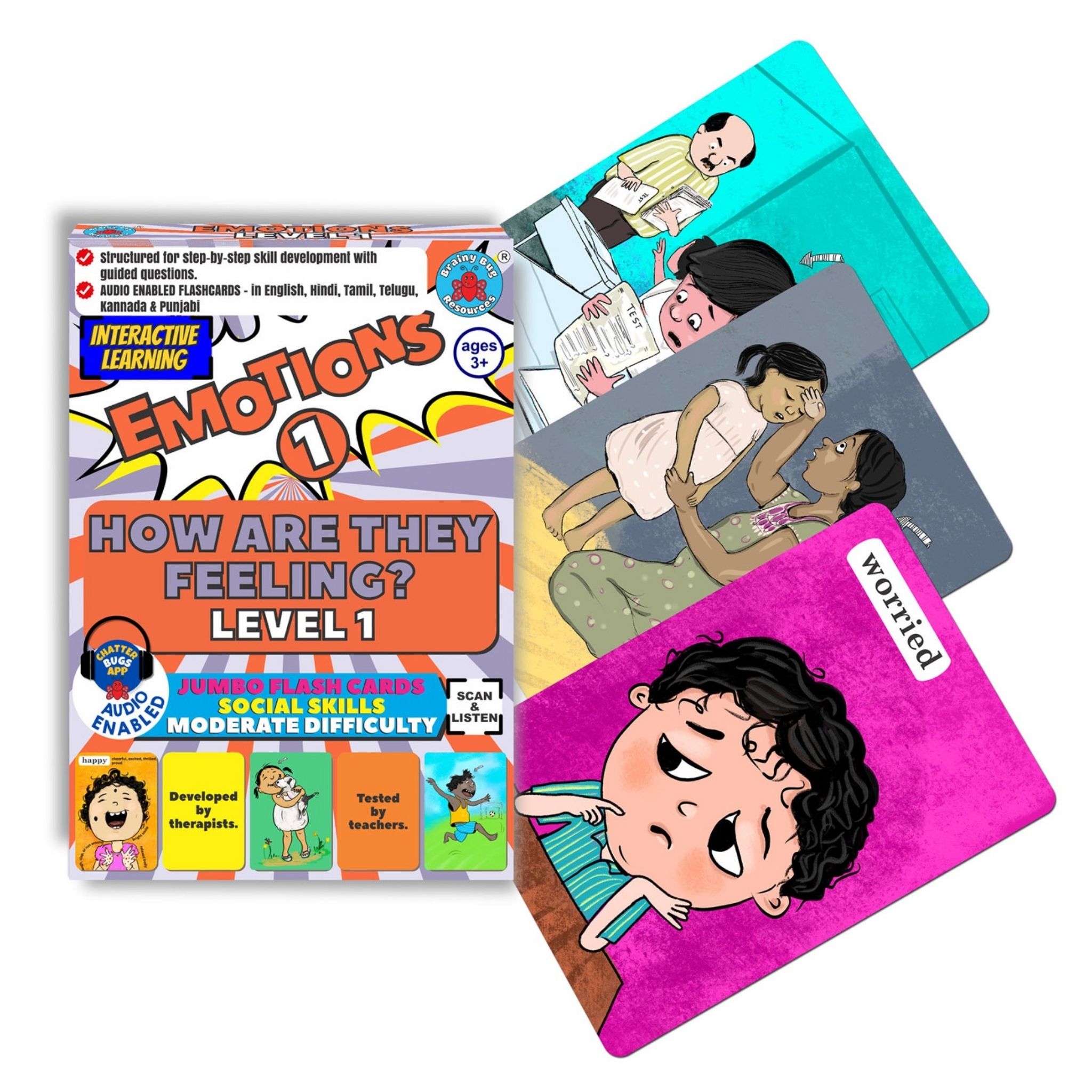
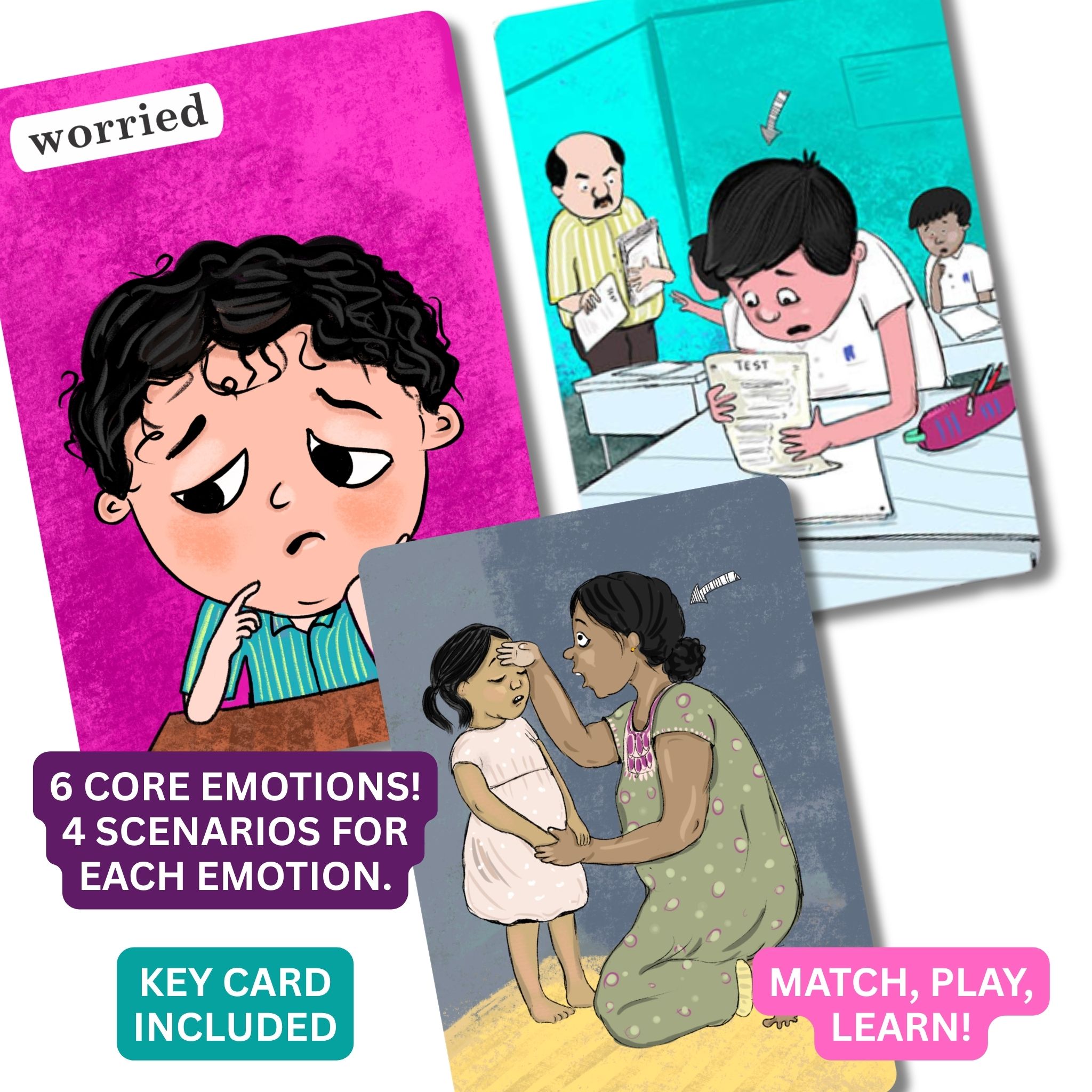
Emotions Level 1 – How Are They Feeling? introduces children to six core emotions through 30 illustrated, audio-enabled cards with guided questions.
Each card presents a familiar situation and gives children opportunities to look for clues, identify the emotion and talk about how the person might be feeling.
The guided questions help children move beyond simply naming an emotion and begin developing the language and reasoning skills needed to understand feelings in context.
Recommended for children aged 3+, this resource supports emotional vocabulary, emotion recognition, comprehension, expressive language, empathy, perspective-taking and social communication.
Is your child learning to understand emotions? This resource can help if your child:
Is learning the names of basic emotions
Has difficulty identifying how someone might be feeling
Can name an emotion but struggles to explain why someone feels that way
Needs support noticing facial, body or situational clues
Finds it difficult to talk about feelings
Is developing empathy and perspective-taking
Needs practice answering questions about emotions
Benefits from visual, audio and guided language support
Why is emotional language important? Children use emotional language throughout the day.
They need to understand statements such as:
“She is happy.”
“He is sad.”
“She is angry.”
But emotional understanding goes further.
Children gradually need to understand:
How does she feel?
How do you know?
Why might she feel that way?
What might she do next?
Being able to talk about emotions helps children communicate their own experiences, understand other people and participate more successfully in social interactions.
From naming emotions to understanding feelings Emotions Level 1 supports an important progression:
See the situation → Notice emotional clues → Identify the feeling → Talk about the feeling → Begin to explain why
A child may first learn:
“Happy.”
Then:
“She is happy.”
With guided questioning, they can begin to think:
“Why is she happy?”
“Because she got a present.”
This progression helps children move from learning emotion words to using emotional language meaningfully.
Six core emotions in familiar situations The deck introduces six core emotions through illustrated scenarios.
Each emotion appears in multiple contexts, giving children opportunities to understand that the same feeling can arise in different situations.
This is important because children need to learn that emotions are not simply labels attached to particular facial expressions.
For example, a child may learn that someone can feel happy because they:
Received something they wanted
Are spending time with someone they love
Achieved something
Are enjoying an activity
Repeated exposure across different situations helps children develop a more flexible understanding of emotions.
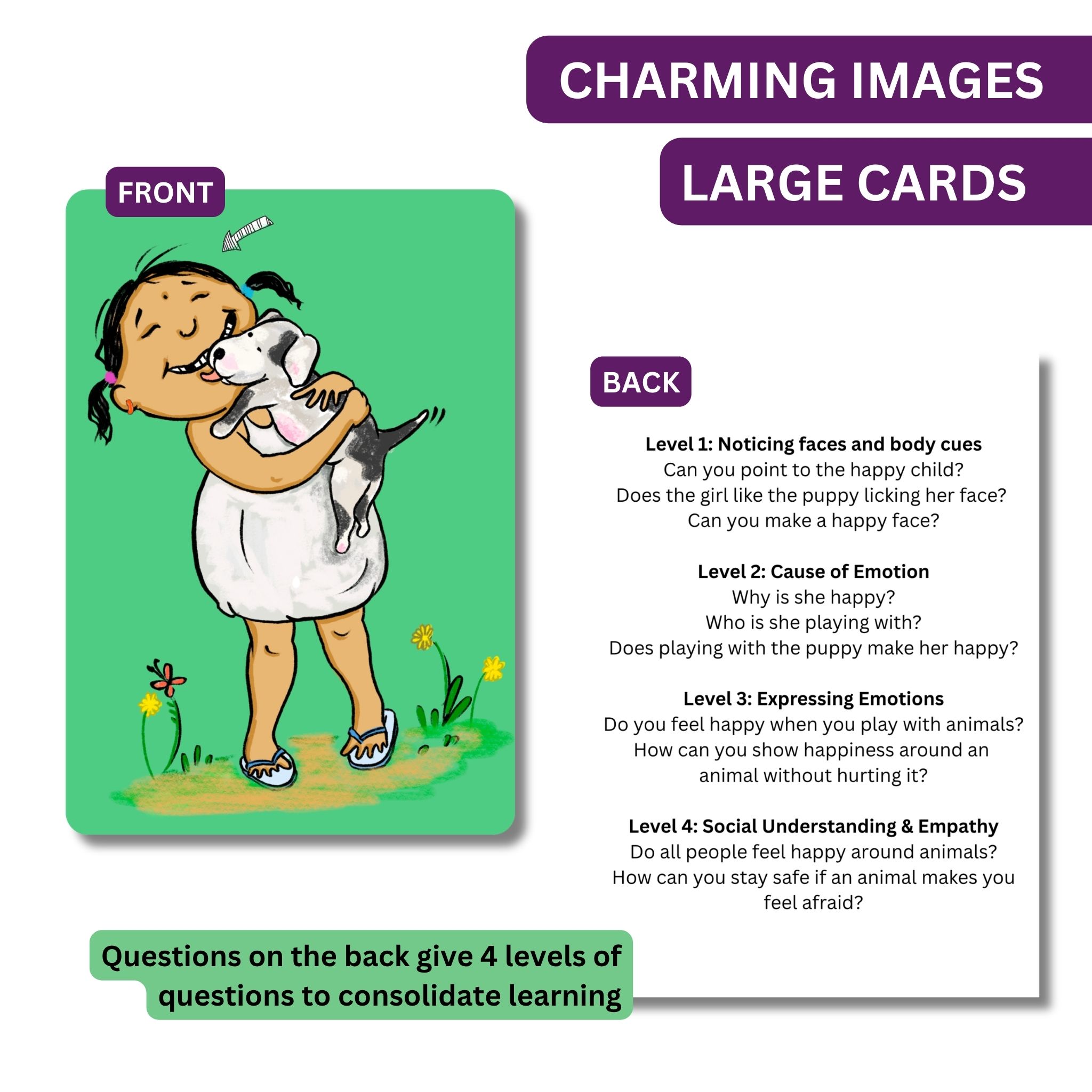
Guided questions that support emotional thinking A key feature of this resource is the use of guided questions.
Rather than simply asking:
“How is she feeling?”
and expecting a child to immediately identify the emotion, the guided questions help them look at the situation and find the clues.
For example:
How is she feeling?
If the child is unsure:
What happened?
Look at her face. What do you notice?
Is she smiling or crying?
How might you feel if that happened to you?
Then return to:
How is she feeling?
“Happy.”
This gives children a structured way to think about emotions and gradually builds independence.
Audio-enabled for listening and language support Every card is audio-enabled, providing spoken language support through the Chatter Bugs app.
Children can listen to the target language while looking at the illustration and thinking about the situation.
They can hear:
The questions
The guided prompts
Emotion vocabulary
Language describing the situation
Model responses
This allows children to see, hear and practise emotional language.
Audio support can be particularly useful for children who benefit from repeated spoken language models or who are learning English as an additional language.
Through the Chatter Bugs app, audio-enabled resources can also provide multilingual language support.
What skills does this resource support? Emotion recognition Children learn to identify basic emotions from situations and visual clues.
Emotional vocabulary Children build vocabulary for talking about feelings.
Comprehension Children practise understanding situations and connecting them with emotional responses.
Expressive language Children develop language for describing how people feel.
Perspective-taking Children begin to think about how another person might feel in a particular situation.
Empathy Understanding another person’s feelings provides an important foundation for empathetic responses.
Social communication Children practise talking about feelings, responding to questions and discussing social situations.
Reasoning Guided questions encourage children to connect what happened → how someone feels → why they might feel that way.
Self-awareness Talking about how characters feel can also create opportunities to connect emotions with the child’s own experiences.
From identifying a feeling to explaining it A child may initially answer:
“Happy.”
With modelling and guided questions, this can become:
“She is happy.”
Then:
“She is happy because she got a present.”
This progression is important.
The goal is not simply for children to memorise emotion labels. It is to help them use emotional vocabulary to understand and communicate ideas about people and situations.
How to use the cards Show your child the illustration and give them time to look carefully at the situation.
Ask:
“How are they feeling?”
If your child answers independently, encourage them to explain their thinking.
If they are unsure, use the guided questions to help them notice the relevant clues.
For example:
Adult: “How is the boy feeling?”
If needed:
“What happened?”
“Look at his face. What do you notice?”
“Would you feel happy or sad if that happened?”
Then return to:
“So how is he feeling?”
“Sad.”
You can then extend the conversation:
“Why is he sad?”
“What could make him feel better?”
This creates opportunities to practise emotion recognition, reasoning, vocabulary and conversational language together.
From supported identification to independent understanding The guided questions provide a scaffold.
At first, children may need several prompts to identify the emotion.
With repeated practice, they may need fewer prompts.
Eventually, they can begin to look at a situation and independently identify:
What happened?
How does the person feel?
What clues tell me that?
Why might they feel that way?
This progression supports the development of more independent emotional understanding.
Talking about your child’s own feelings The cards can also become a bridge into conversations about your child’s experiences.
After discussing a character, ask:
“Have you ever felt like that?”
“When did you feel happy?”
“What makes you sad?”
“What helps when you feel angry?”
This helps children connect emotional vocabulary from the cards to their own lives.
The aim is to make emotional language useful beyond the activity.
Who can use Emotions Level 1? This resource can be used by:
Parents and caregivers
Early-years educators
Teachers
Speech and language professionals
Children developing emotional vocabulary
Children developing social communication
Children learning to recognise emotions
Children learning English as an additional language
Children who benefit from visual, audio and guided language support
The cards can be used during short, focused activities or naturally incorporated into conversations, stories, play and everyday social situations.
Designed for meaningful language development Brainy Bug Resources creates language-development resources for children, designed by speech therapists and child-development specialists with hands-on clinical and classroom experience.
Our resources are built around developmental progression, with vocabulary selected for its relevance to children’s real-world experiences and sequenced to support growing communication.
The Brainy Bug range supports children from first words and early vocabulary through word combinations, sentences, descriptive language, question forms, verbal reasoning, narrative and conversational skills.
The illustrations reflect familiar Indian contexts, helping children connect new language with the world around them.
Audio-enabled resources provide an additional layer of support, allowing children to hear and practise target language through the Chatter Bugs app.
Helping children understand feelings, not just name them Knowing the word:
“Happy.”
is an important first step.
Being able to say:
“She is happy.”
is another.
Being able to explain:
“She is happy because she got a present.”
shows a deeper level of emotional language and understanding.
Emotions Level 1 helps children move from naming feelings to noticing clues, understanding emotions and talking about why people may feel the way they do.
Product Details
30 audio-enabled emotion cards
Covers six core emotions
Multiple situations for each emotion
Guided questions to support emotional reasoning
Clear, child-friendly illustrations
Audio support through the Chatter Bugs app
Multilingual audio support
Recommended for children aged 3+
Builds emotional vocabulary
Supports emotion recognition
Develops comprehension and expressive language
Supports empathy and perspective-taking
Builds social communication skills
Encourages emotional reasoning
Suitable for home, classroom and speech and language activities
See the clues. Name the feeling. Understand why.