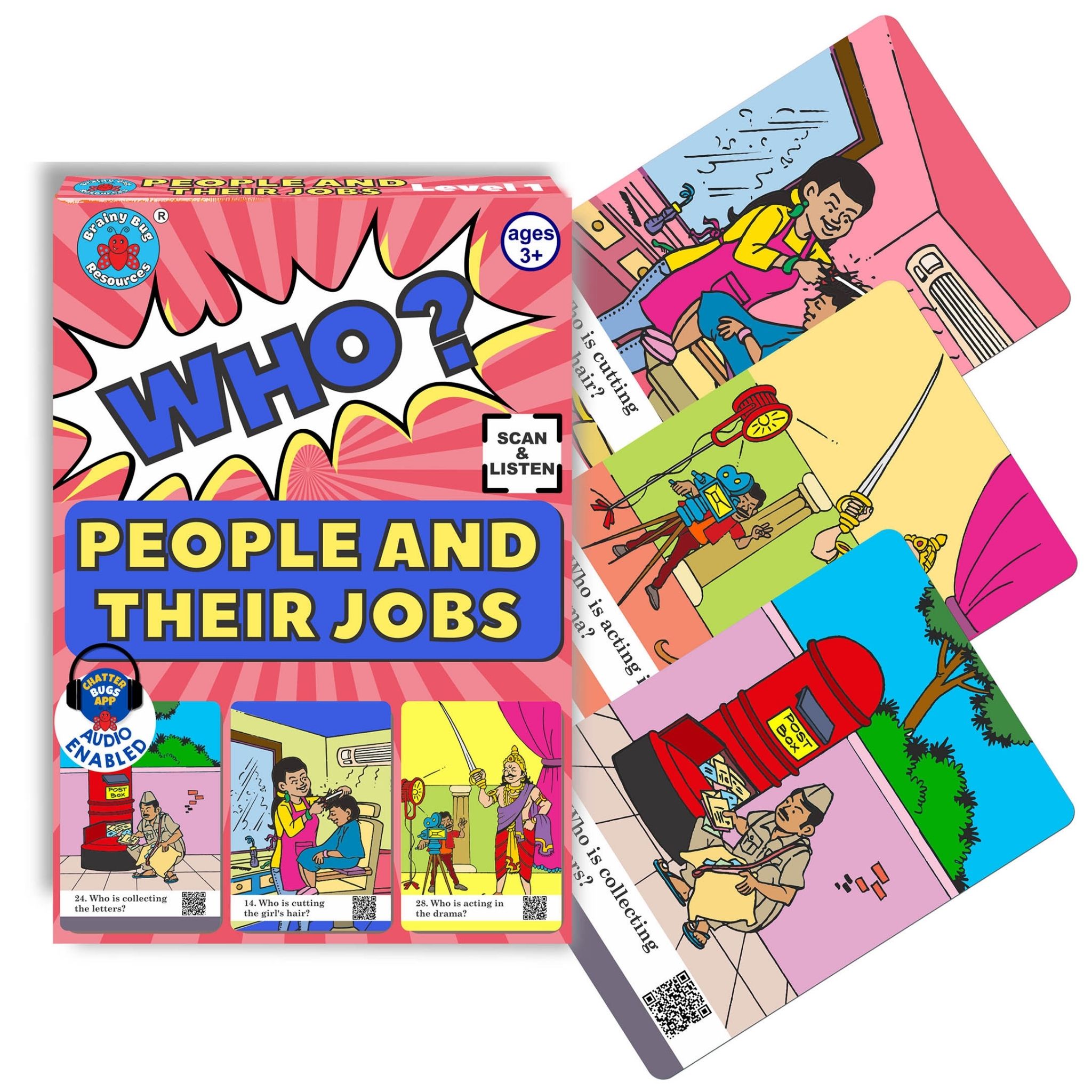
30 Flashcards for Answering “Who?” Questions, Learning Professions and Building Language Understanding and answering “Who?” questions is an important part of early language development. Children need to learn that “who” refers to a person, and then connect people with the roles, jobs and actions they see in everyday life.
Answer “Who?” – People and Their Jobs helps children learn to identify familiar community helpers and professions while practising how to answer “Who?” questions using meaningful vocabulary.
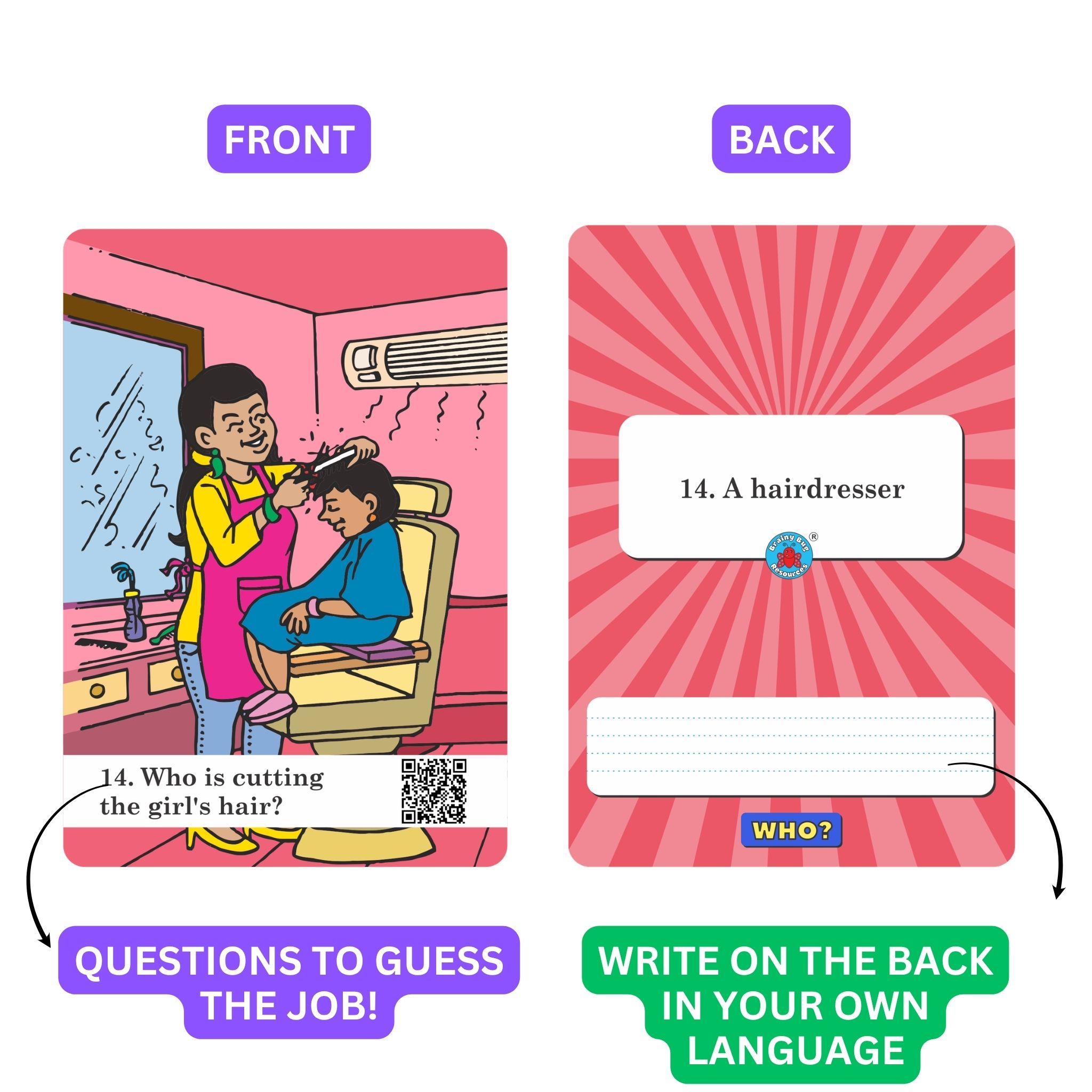
The 30 illustrated jumbo cards feature familiar professions and community roles, with culturally relevant Indian contexts that help children connect the vocabulary with people they may actually see in their communities.
Is your child learning to answer “Who?” questions? This resource can help if your child:
Needs support answering “Who?” questions
Is learning the names of different professions
Can recognise people but needs help identifying their roles
Is building vocabulary related to the community
Needs practice connecting a person with their job
Is beginning to describe what people do
Is developing sentence formation skills
Benefits from clear visual language support
Why are “Who?” questions important? Children encounter “Who?” questions constantly in everyday communication.
“Who is that?”
“Who drives the bus?”
“Who helps sick people?”
Being able to answer these questions requires children to understand that “who” asks about a person.
This is an important foundation for comprehension, conversation and verbal reasoning.
For example:
“Who helps you when you are sick?”
“Doctor.”
Then, as language develops:
“The doctor helps people.”
The goal is to help children move from simply identifying a person to using language to communicate meaningful information about that person.
From identifying people to answering questions Answer “Who?” – People and Their Jobs supports an important progression:
Recognise a person → Name the person/job → Answer “Who?” → Describe what they do → Make a sentence
A child may first identify:
“Doctor.”
Then answer:
“Who helps sick people?”
“Doctor.”
With further practice, the child can begin to say:
“The doctor helps sick people.”
This progression helps children move from single-word answers towards more complete language.
Learning about people and their jobs The 30 cards introduce children to familiar professions and community roles.
Learning about these people gives children useful vocabulary for talking about the world around them.
Children can learn to:
Identify different professions
Name the person or job
Understand what that person does
Connect people with their roles
Answer questions about community helpers
Talk about people they encounter in everyday life
The use of familiar Indian professions and contexts helps make the vocabulary relevant and easier for children to connect with their own experiences.
What skills does this resource support? Answering “Who?” questions Children practise understanding and responding to questions about people.
Vocabulary Children develop vocabulary for professions and community roles.
Comprehension Children connect the question, picture and answer.
Expressive language Children practise naming people and talking about what they do.
Sentence formation The cards provide opportunities to move from single-word answers towards simple sentences.
Verbal reasoning Children begin to understand relationships between people, roles and actions.
Community awareness Children learn about people who perform familiar and important roles in their communities.
Conversation skills Answering questions about people provides useful practice for everyday conversations.
Who does what? One of the most useful ways to extend these cards is to connect the person with the action.
For example:
Doctor → helps sick people
Teacher → teaches children
Police officer → keeps people safe
Firefighter → puts out fires
This creates an important language connection:
Who? → What does the person do?
Children can then begin combining the vocabulary:
“Teacher.”
→ “Teacher teaches.”
→ “The teacher teaches children.”
This makes the cards useful not only for teaching professions, but also for developing verbs, sentence formation and expressive language.
How to use the cards Start by showing your child a card and naming the person or profession.
Then ask:
“Who is this?”
Encourage your child to answer with the name of the profession.
Once they are confident, extend the activity:
“What does a doctor do?”
“Who helps sick people?”
“Who teaches children?”
You can also encourage your child to:
Point to the correct person
Name the profession
Answer “Who?” questions
Describe what the person does
Act out the profession
Connect the person with an action
Use the profession in a sentence
Talk about people they know who do similar jobs
For example:
Adult: “Who teaches children?”
Child: “Teacher.”
Then expand:
“The teacher teaches children.”
This helps children gradually move from identification to meaningful language use.
From one-word answers to sentences A child may initially answer:
“Doctor.”
That is a successful response.
With modelling and repeated practice, the response can become:
“The doctor.”
Then:
“Doctor helps.”
And eventually:
“The doctor helps sick people.”
This gradual progression supports children as they move from single words to combinations and sentences.
The aim is not to demand complete sentences before a child is ready. It is to provide language models that children can grow into.
Who can use these cards? This resource can be used by:
Parents and caregivers
Early-years educators
Teachers
Speech and language professionals
Children developing vocabulary
Children developing question-answering skills
Children developing expressive language
Children learning English as an additional language
The cards can be used during short, focused language activities or naturally incorporated into conversations about people and the community.
Designed for meaningful language development Brainy Bug Resources creates language-development resources for children, designed by speech therapists and child-development specialists with hands-on clinical and classroom experience.
Our resources are built around developmental progression, with vocabulary selected for its relevance to children’s real-world experiences.
The Brainy Bug range supports children from first words and vocabulary through word combinations, sentences, verbal reasoning, narrative, question forms and conversational skills.
The illustrations reflect familiar Indian contexts, helping children connect new vocabulary with the world around them.
Helping children answer “Who?” and say more Learning the word “doctor” is useful.
Being able to answer:
“Who helps sick people?”
with:
“Doctor.”
is an important communication skill.
Being able to go further and say:
“The doctor helps sick people.”
opens up even more possibilities for communication.
Answer “Who?” – People and Their Jobs gives children meaningful practice identifying people, answering questions and connecting professions with the actions they perform.
Product Details
30 illustrated jumbo flashcards
Familiar professions and community roles
Designed around “Who?” questions
Supports question answering and comprehension
Builds vocabulary related to people and professions
Supports expressive language
Encourages sentence formation
Connects people with their jobs and actions
Uses culturally familiar Indian contexts
Recommended for children aged 3+
Suitable for home, classroom and speech and language activities
Who is it? What do they do? Let’s talk about the people around us.
























Information request –
Hello, I’d like to learn more about your services and how they could fit my needs. Please contact me when convenient — happy to share more context. Best regards.